See every note
Follow pitch and note names as you sing or hum.
 VocalPalGet the app
Your voice, made visible
VocalPal turns every note into a clear pitch curve in real time—so you can explore your range, understand your intonation, and make every practice count.
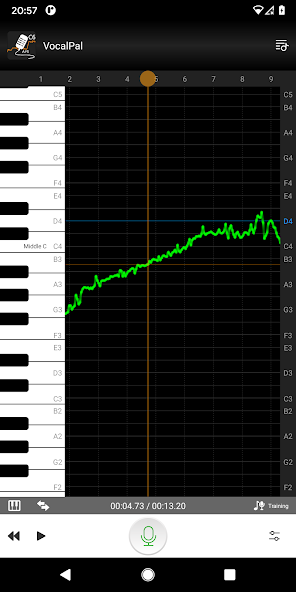
Follow pitch and note names as you sing or hum.
Review the notes your voice reaches with clarity.
Observe stability, transitions, vibrato, and progress.
Built for useful practice
VocalPal gives you visual feedback while you sing, then lets you revisit the details that are easy to miss in the moment.
See detected notes and the pitch curve as you sing, without waiting for the recording to end.
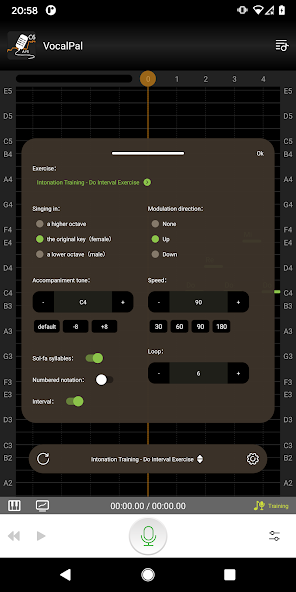
Use visual note targets and exercise controls to make each session more intentional.
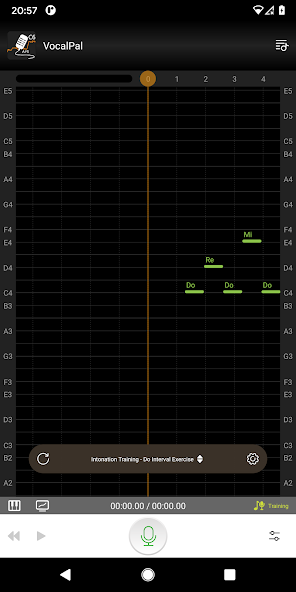
Choose a comfortable starting point and work at a pace that fits today's practice.
How it works
Use your phone's microphone in a quiet space.
Watch pitch and note names appear in real time.
Zoom, replay, and compare what changed across practice.
Vocal guides
Understand the pitch curve, note names, vocal range, accuracy, and common octave jumps caused by noise or harmonics—then turn what you see into a more focused practice session.
Explore Vocal GuidesFrom the journal
Fresh guidance on vocal range, pitch accuracy, warm-ups, and more focused singing practice.
View all articlesCompare two ways to practise vocal exercises for agility and runs, from slow metronomic drills to phrase-based riff work, and learn which method suits your voice and goals.
Voice TrainingLearn how to track vocal practice progress with recordings in VocalPal by choosing what to listen for, reading pitch curves as observation aids, and adjusting the next session based on what you notice.
Vocal Warm-UpsA short, practical warm-up for singers who need to prepare quietly in a shared home, with steps you can do in about six minutes before you sing.
Pitch & IntonationA guided VocalPal practice session for singers who want to sing a note without a reference pitch, with checkpoints and adjustment choices along the way.
Vocal RangeUnderstand why pitch curves are observation aids not coaching when you review vocal range in VocalPal, and learn a calm routine for reading curves without overinterpreting them.
Vocal TechniqueA beginner-friendly walkthrough of one practice session for high notes, with checkpoints and adjustments. VocalPal records your singing and shows pitch curves so you can observe progress.
Questions
No. Sing or hum into the microphone and VocalPal displays detected pitch and note names visually.
It can help you observe the notes you reach during a session. Treat the result as a practice reference rather than a permanent label for your voice.
Practice in a quiet space and sing without accompaniment when possible. Background sound and harmonics can affect pitch detection.
YOUR VOCAL TRAINING PAL